


Cart 0
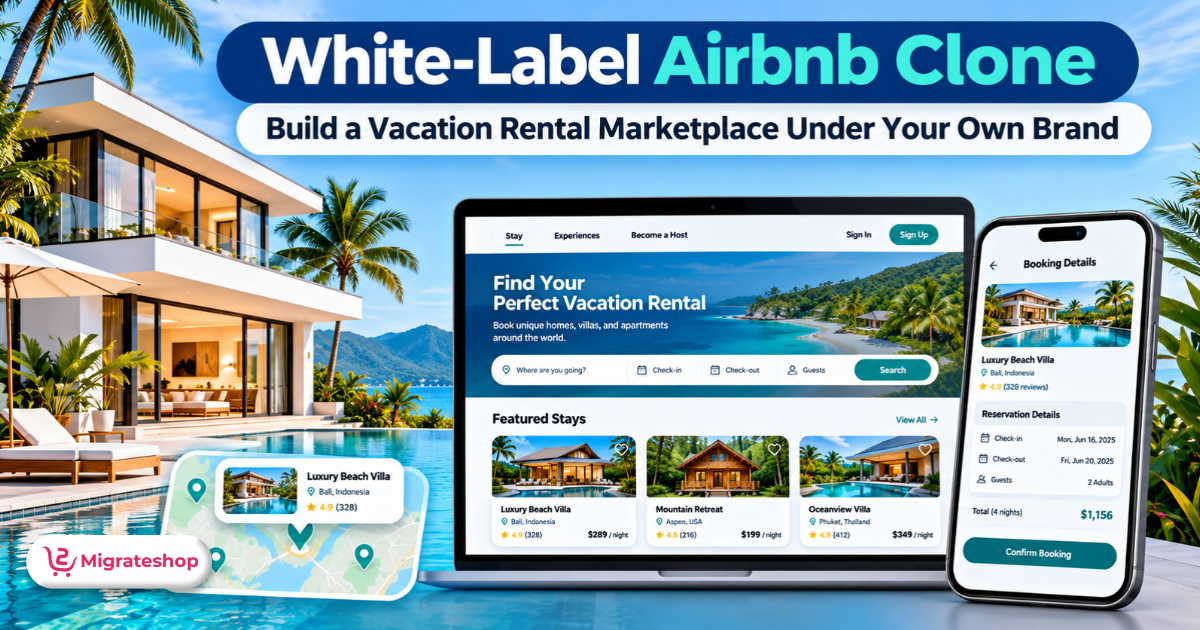
The vacation rental market gives entrepreneurs a clear opportunity: connect property owners with travellers through an online booking platform. Whether you want to serve holiday homes, homestays, villas, or short-term stays, you need the right technology to manage listings, reservations, payments, and user activity. One option is a white-label Airbnb clone ready-made rental marketplace software that you can brand as your own.
Instead of developing every component from scratch, you start with an existing software foundation and adapt it to your business requirements.
This guide explains how a white-label rental platform works, which features you need, what to evaluate when choosing a provider, and how to launch your own marketplace.
Table of Content
- Quick Answer: What Is a White-Label Airbnb Clone?
- What Does a White-Label Rental Platform Mean?
- Why Start With a Ready-Made Solution?
- What Features Should a Rental Marketplace Include?
- How Do You Choose the Right White-Label Airbnb Clone?
- White-Label Software or Custom Development: Which Is Better?
- How Do You Launch Your Own Rental Marketplace?
- Questions by Stage: What to Ask Before You Buy?
- Migrateshop Airbnb Clone: A Laravel-Based White-Label Rental Marketplace Solution
- Frequently Asked Questions
Quick Answer: What Is a White-Label Airbnb Clone?
A ready-to-use rental marketplace platform that you can rebrand and customize with your own unique identity: website, domain, and trademarks. It provides all the key functionalities for property listings, guest and host profiles, booking system, payments, and admin, enabling you to create an accommodation booking service without developing from the ground up.
In short:
- What it is: Branded, ready-made software for a vacation rental marketplace.
- Who it suits: Entrepreneurs launching platforms for holiday homes, homestays, villas, or short-term stays.
- What to check first: Source code access, licensing, branding options, payment integrations, support, and maintenance.
- Example: The Migrateshop Airbnb Clone, a Laravel-based white-label rental marketplace solution with a web platform, admin panel, and Android and iOS app support.
What Does a White-Label Rental Platform Mean?
A white-label rental platform refers to a piece of software that a company can use as its product and rebrand. It offers the infrastructure for listings and booking management while leaving your branding, policies, and customer journey intact.
Say an entrepreneur creates a marketplace for holiday villas in a single region. Property owners create accounts and list their villas, and travelers book from them on the site. You run the marketplace. The platform software underpins it all.
Why Start With a Ready-Made Solution?
From scratch, you have to create a rental marketplace as architecture, map user flows, develop the booking processes, integrate payments, and test the entire platform. An out-of-the-box rental marketplace can save a bit of this initial effort.
– A faster beginning: You’ve already got the core marketplace functionality in place, so you can hit the ground running in terms of configuration, customization, and getting ready to launch.
– Your own business identity: to brand your own domain, businesses can create their own identity.
– Existing features access: Start from what is already there for listings, reservations, accounts, and admin.
– Room for customization: This can be a helpful feature when you require a degree of customization to the software. This will depend on your resources and scope of work.
There is no one-size-fits-all solution. Carefully examine how this solution works in the real world, licensing implications, means of tailoring, and any maintenance commitment before making a purchase.
What Features Should a Rental Marketplace Include?
The right feature set depends on your audience and operating model. These are the components that matter most for day-to-day operations:
| Feature | What it should do |
| Property listings and management | Let owners submit details, upload photos, describe amenities, set prices, and update availability |
| Guest and host accounts | Give guests profiles, reservations, and saved properties; give hosts listings and booking requests |
| Booking and availability management | Let travellers check availability and book; let hosts manage calendars and requests |
| Payments and revenue management | Support booking transactions, platform fees, refunds, and commission settings |
| Administration and reporting | Let you oversee users, hosts, listings, reservations, payments, and platform activity |
Before choosing software, verify the supported payment gateways, transaction workflows, refund handling, and commission configuration. Admin controls become more important as your marketplace grows.
How Do You Choose the Right White-Label Airbnb Clone?
Focusing on features or price alone when comparing providers can result in choosing the wrong one. Here’s what you want to consider first:
- Source code access: Do you have access to source code? And what rights does your license grant you?
- Your branding choices: Is it ok to use your own domain name, logo, and business name?
- Platform availability: Which web and mobile apps are available for it?
- Customization: What modifications are available, and which of those are paid for?
- Payment integrations: Are the payment services offered appropriate for your target customers?
- Technical assistance: How long do I get installation support, troubleshooting,, and support?
Request a demo of a product and give your most critical workflows a test drive before you buy.
White-Label Software or Custom Development: Which Is Better?
Neither is universally better. The right choice depends on the complexity of your idea.
- Choose white-label software when your requirements align with existing marketplace functionality and you want a practical starting point that avoids building standard components yourself.
- Choose custom development when If you need more control of architecture, sophisticated workflows or functionality and you can plan your schedule based on your budgets and resources, then a custom build is a suitable option for you.
- Compare technical requirements and long-term costs before deciding.
How Do You Launch Your Own Rental Marketplace?
Not too bad to get things off the ground, but it does take some additional steps. The launch process will be:
- Select the vertical: You want to serve holiday homes, homestays, villas, serviced apartments, or a region.
- Define your revenue model: Consider bookings, commissions, subscriptions, listing fees, and any other relevant sources.
- Test the system: Post listings, make bookings, take payments, and use admin functions.
- Brand it: Brand the platform and make it your own for your end user.
- Onboard property owners: Start with a quality, relevant inventory.
- Test before launch: Make sure you have tested the overall visitor and host experience—from bookings, payments, notices, and cancellations.
- Evaluate success: Keep records of how long visitors stayed, the number of enquiries and bookings made, and customer feedback.
Questions by Stage: What to Ask Before You Buy?
Different buyers need different answers at different points. Use this as a quick guide.
If you are just exploring (awareness)
- What is a white-label Airbnb clone? Ready-made, brandable rental marketplace software (see the quick answer above).
- Do I need to build the whole platform from scratch? Not necessarily. You may still need configuration, customization, integrations, and testing.
If you are comparing options (consideration)
- White-label or custom development? See the comparison above.
- What should I check in a provider? Source code, licensing, branding, payments, support, and maintenance.
If you are ready to decide (decision)
- Does the solution support the apps I need? Check the exact web, Android, and iOS inclusions in your package.
- Can I see it working? Request a live demonstration and test your key workflows.
Migrateshop Airbnb Clone: A Laravel-Based White-Label Rental Marketplace Solution
If you want to launch an accommodation booking business under your own brand, the Migrateshop Airbnb Clone is built with Laravel. It includes a web platform, an admin panel, and Android and iOS app support.
Listed capabilities include property listing management, host and guest accounts, reservation management, payment functionality, messaging, and administrative controls. Migrateshop also provides unencrypted source code, installation assistance, and white-label branding options.
Mobile app support, branding, and other inclusions should be checked against your selected package and its terms.
Ready to see it in action? Explore the Migrateshop Airbnb Clone to review the features, pricing plans, and live demonstration, then decide whether it fits your business requirements.
[Book a live demo of the Airbnb Clone]
Proof near the button: add before publishing your verified customer count, a real testimonial or case study, and a screenshot of the admin panel and mobile app.
1. Can I launch a rental marketplace with my own brand?
Yes. White-label branding options can let you use your own business name, logo, and domain. Confirm the available options under your selected software package.
2. Do I need to develop the entire platform from scratch?
Not necessarily. A ready-made rental marketplace solution gives you an existing software foundation. You may still need configuration, customization, integrations, and testing before launch.
3.Can I customize the source code?
Migrateshop lists fully accessible, unencrypted source code for its Airbnb Clone solution. Review the applicable license and support terms before making modifications.
4. Does the solution support mobile applications?
Migrateshop lists Android and iOS app support. Check your selected package for the exact app inclusions and deployment arrangements.
5. What should I evaluate before purchasing?
Review the functionality, source code access, licensing, branding options, payment integrations, customization requirements, installation assistance, and ongoing support.
6. What is the difference between a white-label Airbnb clone and custom development?
A white-label clone gives you ready-made marketplace functionality to brand and customize. Custom development gives you more control over architecture and unique workflows, but needs a build process planned around your budget and resources.

You may also like

Build Your Rental Platform With Our Airbnb Clone
Build Your Rental Platform With Our Airbnb Clone
The Rental Platform has been a relatively new market in the last couple of years...

Step-by-step guide to build Airbnb clone website from scratch
Step-by-step guide to build Airbnb clone website from scratch
Airbnb Clone provides a convenient way for travelers to find and book accommodations in various...

Flat 60% OFF on Fiscal Year End SALE 2023 at Migrateshop
Flat 60% OFF on Fiscal Year End SALE 2023 at Migrateshop
It is that time of the year again! Get ready for Migrateshop’s Fiscal Year End…