


Cart 0

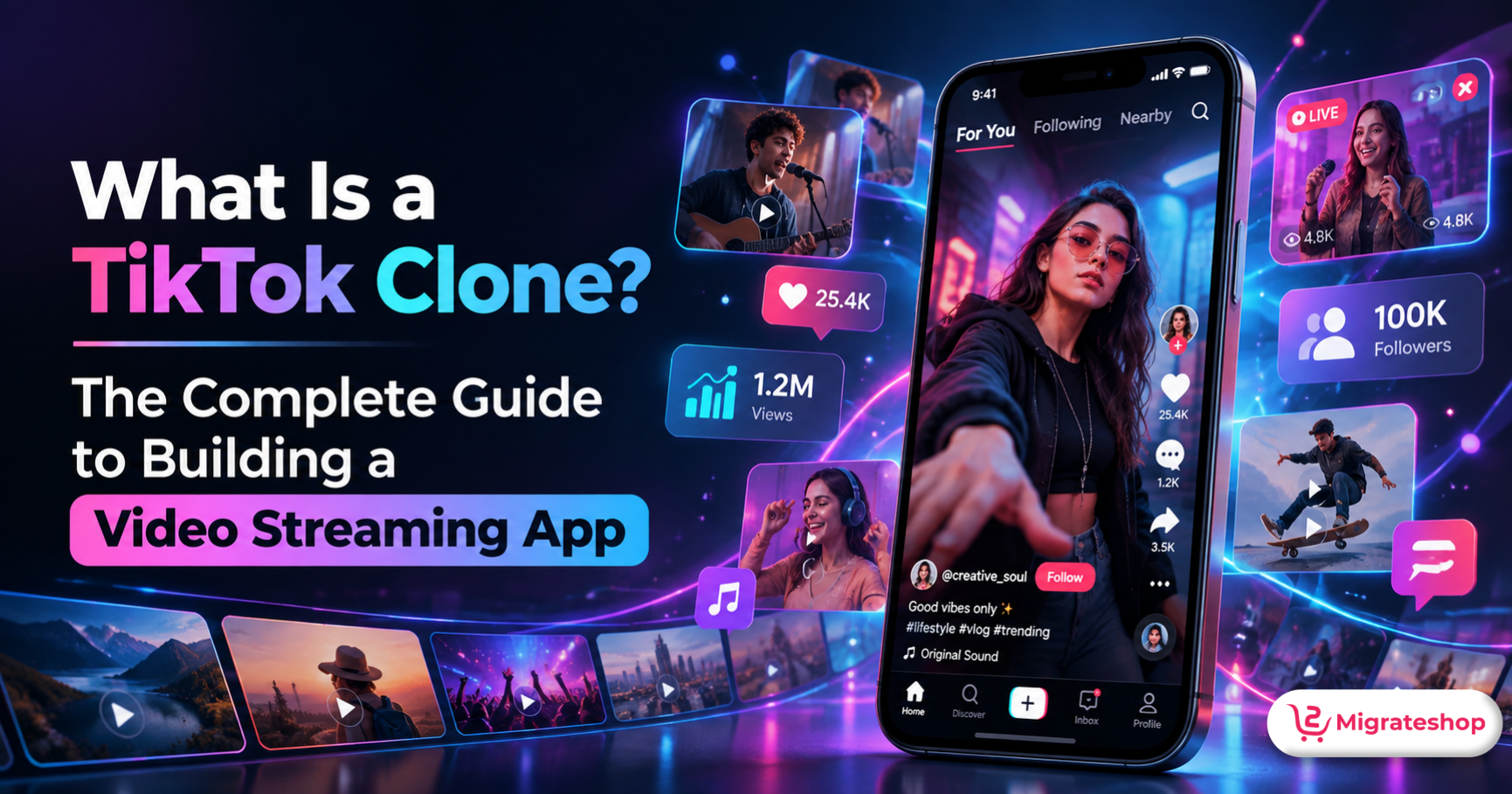
Short-form Video Is Revolutionizing How People See Content, Connect With Creators, and Use Social Media. Short-form video has transformed the experience of entertainment and communication across categories such as education, fitness, shopping, travel, and professional communities. Entrepreneurs interested to set up their own TikTok clone app can make use of a clone script available that can be used as a base, and it can even be personalized to their target audience, branding, features, business model, and needs.
A short-video platform might include video sharing, stories, live, social, monetization, chat, moderation, analytics, and admin, based on the business model (more on this below). Everything a user encounters on the platform might be a short video.
This blog will describe what such a platform is, what features are important, how it works, how to develop it, what factors affect the development time and the cost of the product, how a short-video platform makes money, and what companies need to keep in mind before starting development.
The rise in popularity of TikTok has prompted numerous businesses to venture into the field of short video apps. If you want to create a video streaming app similar to TikTok, this article will teach you all you need to know about TikTok clone and platform development.
Table of Contents:
- What Is a TikTok Clone?
- What Does an App Like TikTok Require?
- Which Features Should You Build First?
- How Does a Short-Video App Work?
- Step-by-Step Development Approach: How to Make an App Like TikTok?
- What is the Cost to Develop an App Like TikTok?
- How Long Does Short-Video App Development Take?
- How Do Short-Video Apps Make Money?
- Ready-Made Solution vs. Custom Development
- Which Niches Are Ideal for Short-Video Application?
- What Are the Difficulties of Developing a Short-Video App?
- Final Thoughts
- Frequently Asked Questions
What Is a TikTok Clone App?
A TikTok clone is a short-video platform which has built around the core experience of creating, uploading, discovering, watching, and interacting with short videos.
The term does not necessarily mean creating exact modules of TikTok. Instead, it generally refers to a software solution that provides a foundation for building and launching a similar type of video-sharing experience. So entrepreneurs can adapt the platform to their own branding, audience, content strategy, monetization model, customization, and functionality needs.
A modern solution can include capabilities such as
- User registration and profiles
- Short-video feeds
- Video and image posts
- Stories
- Video editing and music
- Likes, comments, reactions, and sharing
- Live streaming
- Creator monetization
- In-app chat
- Notifications
- Content moderation
- Analytics
- Administration tools
- Multi-language support
The objective should not simply be to reproduce another social network. A successful platform needs a clear audience, useful features and functionalities, reliable infrastructure, and a reason for users and creators to keep coming back.
Why Build a Short-Video App?
Anyone can use short-form video across any industry, as it delivers simple visual content that is easy to grasp and offers content creators direct interaction with their audience.
The business may choose to develop a platform for a large entertainment market or for a niche of the market. Entertainment, education, fitness, travel, food, shopping, professional, and many other niches enable the build of a niche video platform.
A dedicated platform also offers a business more control over:
- Brand identity
- User experience
- Content policies
- Monetization
- Creator relationships
- Community development
- Product functionality
- Audience targeting
But the creation of a video platform would also require preparation for storage, content moderation, scaling, security, video processing, and content delivery.
What Does an App Like TikTok Require?
A Short Video Platforms requires more than a vertical video stream. For everyone to enjoy the platform, they need easy ways to create and upload videos, find and engage with videos and creators, and chat with other viewers. The following set of features includes the basic functionality needed to build a contemporary short-video platform.
User Profiles and Social Connections
Profiles provide a space to share information about yourself, control content, and connect with other users. Profiles and social features that you may find useful include:
- User profiles and profile levels
- Following and follower connections
- Blue verification badges
- Profile QR codes for quick sharing
- Privacy controls
- Block-user functionality
- Comment restrictions
These features allow users to establish an online presence while still giving them the ability to control their interactions.
Short-Video Feed and Content Discovery
The video feed lies at the core of the platform. A vertical feed allows for quick and fun browsing, and various discovery areas assist in discovering new content.
Core feed features can include:
- For You Feed
- Following feed
- Nearby content
- Vertical video playback
- Likes and comments
- Hashtags and mentions
- Reactions
- Animated comments
Video publishing via social media and short links
People have several options for exploring content through a mixture of curated feeds and feeds they choose to follow.
Video and Reel Creation
By providing tools that enable users to easily publish a wide variety of short content, content creation tools can:
- Image, video, and text posts
- Reels
- Music for videos
- Hashtags and mentions
- Video previews
- Watermarks
- Video sharing
- Save-to-favorites functionality
The level of detail in creation tools can be increased by audience and content niche.
Stories, Filters, and AR Effects
Stories provide users the ability to share content that is time-sensitive in addition to their regular posts. A richer story experience may include:
- Text, photo, and video stories
- Music in stories
- Story filters
- AR effects
- Custom story duration
- Story music
- Story sharing
These features also provide creators with more opportunities to stay active and engage with their followers.
Search and Content Discovery
Search enables users to locate certain creators, content, and topics of interest instead of relying solely on the recommendation feed.
Important discovery features include:
- Keyword search
- Hashtag discovery
- Creator discovery
- Trending content
- Nearby content
- Personalized recommendations
- Profile QR sharing
- Short links for profiles and videos
With a powerful discovery system, it will be much simpler for users to discover content that is relevant to their liking.
Live Streaming and PK Battles
Live streaming provides instant engagement between a creator and his/her fan. The platform shall encourage live streaming in addition to FanPKs and other engaging content.
Useful live features include:
- Live streaming
- PK battles
- Viewer reactions
- Virtual gifts
- Co-host support
- Up to four co-hosts
- Streaming summaries
Such features can make live sessions more interactive, as well as open up more avenues for creator interaction.
Chat and Real-Time Communication
The chat system exceeds the scope of comments or live streams in private communication. A chat system may be used to:
- Instant messages
- Photo and media sharing
- Voice notes
- GIFs
- Voice and video calling
- QR-based profile sharing
Allows users to have several options for communicating without having to go off the platform.
Creator Monetization
Monetization tools can provide creators a way to monetize their audience and also provide the platform with new revenue streams.
This may involve: If you have a startup business.
- Coins
- Virtual gifts
- Gift withdrawals
- In-app coin purchases
- Plus membership
- Advertising
- Creator earnings
A verified badge, ad-free experience are also features that your membership program could have.
Administration and Content Moderation
An extensive admin panel is essential to oversee users, content, monetization, and platform administration.
Key administration features can include:
- User management
- Post and content management
- Music management
- Language management
- Coin package management
- Analytics dashboard
- App settings
- Currency and user-level controls
- Content moderation
Nudity detection, comment restrictions, and other tools for handling offensive material may be included in moderation features.
Security and User Protection
Security needs to be integrated into the platform, not bolted onto it. Authentication and authorization are what keep the account and user/admin features safe.
The technology stack can support:
- JWT authentication
- Role-based permissions
- Privacy controls
- User blocking
- Comment restrictions
- Content moderation
- Nudity detection
The security architecture should be scaled to the platform’s infrastructure and use.
Which Features Should You Build First?
Adding each feature at launch adds to the time and effort of development. Instead, focus on providing the essential services for creating, discovering, and engaging with short-form content, then add the extras based on how users interact with the app.
Essential Features for the First Release
A practical first release can include:
- User registration and profiles
- Vertical video feed
- Following
- For You and content discovery
- Video and reel creation
- Music support
- Likes, comments, and reactions
- Hashtags and mentions
- Video sharing
- Stories
- Notifications
- User reporting and blocking
- Content moderation
- Admin management
These components give you the fundamental user flow: make content, find content, engage with content, and come back to the platform.
Features to Add Later
When the core experience is mature, more can be added, such as
- Live streaming
- PK battles
- Co-hosting
- Virtual gifts
- Coins and withdrawals
- Plus memberships
- Advanced recommendations
- Voice and video calling
- Story filters and AR effects
- Creator analytics
- Advanced monetization
- Profile levels
- Advanced privacy controls
- Expanded moderation tools
This phased approach enables you to test launching a specific product and then evolve the platform based on your target audience’s requirements and your business objectives.
How Does a Short-Video App Work?
It’s about a long-planned trade play just recently started in the US and Chinese markets.
When a creator uploads a video, the platform must process the video, store the video, transcode the video, and serve the video.
It can be summarized in the following steps:
Create, upload, process, store, deliver, watch, interact, and discover.
There are technical aspects that underlie this experience, for example:
- Application services
- Backend systems
- Databases
- Media storage
- Video processing
- Content delivery
- Authentication
- Notifications
- Real-time communication
- Analytics
- Content moderation
Storage, bandwidth, processing, and, importantly, real-time functionality may all become more important as users and videos start to build. The technical architecture should therefore be designed with the initial and subsequent roll-out in mind.
How to Make an App Like TikTok: Step-by-Step Development Approach?
Creating an app like TikTok should focus on product planning, not just development.
- Establish the audience and business model
Begin with the target audience and the experience that the platform will offer.
Consider:
- Target audience
- Content categories
- Geographic market
- Creator strategy
- Monetization
- Competitive positioning
Having an audience in mind helps in prioritizing features for the initial release.
- Define the MVP
Choose the feature to be used at initial launch.
The goal should be to fully build out a core experience, rather than replicate every feature of a fully mature social platform.
- Design the User Experience
Visualize the top tracks for users, artists, and administrators.
Some possibilities are:
- Registration
- Profile creation
- Content discovery
- Video viewing
- Content creation
- Engagement
- Messaging
- Reporting
- Administration
Easy to find. Content should be accessible to viewers and creators alike.
- Select a Development Architecture
Must be able to serve the anticipated users, amount of content, performance expectations and possible growth.
Important considerations are:
- Frontend architecture
- Backend services
- Database structure
- Video storage
- Video processing
- Streaming infrastructure
- Authentication
- Notifications
- Real-time communication
- Analytics
- Security
- Develop the Core Functionality
Create the MVP following the specifications of the product.
Where a ready-made foundation is being used, development can take place on configuration, branding, customisation, integrations and additional functionality needed by the business.
Migrateshop, for instance, presents its solution as being customizable with Android, iOS, and a web admin panel all supported. The product page lists technologies such as Flutter, Node.js, Express.js, MongoDB, Socket.io, and ZEGOCLOUD. These, along with other information available on the Product Page, are considered product-specific and should be kept in sync with the live product page.
- Test the Video Experience
Testing should focus on the functionality as well as how it actually appears to the viewer.
- Video uploads
- Playback
- Varying network states
- Device compatibility
- Content loading
- Authentication
- Notifications
- Live functionality
- Messaging
- Moderation workflows
- Security
- Launch and Improve
Once launched, use feedback and product analytics to identify the features that need to be enhanced.
A platform can also grow as businesses understand what types of content, features, and interactions are most valuable to users.
What is the Cost to Develop an app like TikTok?
Not every short-video platform will have the same development cost.
The total investment can vary depending on:
- Number of platforms
- Feature complexity
- UI/UX requirements
- Video processing
- Streaming requirements
- Storage and bandwidth
- Administration tools
- Third-party integrations
- Security requirements
- Customization
- Development resources
- Testing and maintenance
A targeted MVP and a feature-full platform with live streaming, messaging, monetizing creators, advanced moderation, and analytics can have very different needs.
In the case of a premade solution, the initial software-only costs might be easier to put in place, but customization should be accounted for separately, as well as infrastructure, third-party services, and future needs.
Migrateshop’s solution offers various plans such as source code, installation, application, access, support, and more. Since product pricing and features can change, check the product page for the latest product pricing information and features before buying the product.
How Long Does Short-Video App Development Take?
The timeframes for implementation will be project specific.
A targeted MVP takes a lot more work than a complete feature-rich live streaming platform , more advanced creator tools, monetization, messaging and lots of administration functionality.
Factors that can affect the timeline include:
- Number of features
- Number of platforms
- Design complexity
- Customization
- Integrations
- Testing requirements
- Video infrastructure
- Team size
- Feedback and approval cycles
Employing a pre-developed foundation can alter the building load because the company might start with functions already in place, rather than creating everything from scratch.
How Do Short-Video Apps Make Money?
The platform can integrate multiple monetization schemes depending on its target audience and business goals.
Advertising: Ad networks enable publishers to monetize by showing targeted advertising to the right audiences.
Subscriptions: A paid membership can offer you the following: premium features, some extras, or unlimited options.
Virtual Gifts and Coins: Users can buy coins or virtual goods to use to tip creators during live videos and other interactions.
Creator Monetization: Content creator revenue models may encourage people to join your platform and keep providing value.
E-commerce: Short-form videos can also play a role in product discovery and shopping, bridging discovery and commerce.
The optimal monetization option varies according to the platform audience, content model, user behavior, and other business goals.
Ready-Made Solution vs. Custom Development
When creating a short-video platform, companies have the choice to create it either using a ready solution or entirely custom.
A ready-made short-video platform can have the already existing features that the business can customize to fit their brand and needs.
Custom development gives you greater freedom in terms of architecture, functionality, interface, and any other special needs.
Ready-Made Approach
Potential advantages include:
- Faster starting point
- Existing core functionality
- Reduced initial development complexity
- Easier feature planning
- Access to an established foundation
Custom Development
Potential advantages include:
- Greater customization
- Unique user experiences
- Specialized functionality
- Greater control over architecture
- More flexibility for unusual requirements
Neither method is always best. Which one to use really depends on the business model, budget, schedule, technical needs, and amount of customization required.
Which Niches Are Ideal for Short-Video Applications?
Having a niche will allow a new platform to distinguish itself rather than competing with the whole entertainment industry.
Education: You can incorporate those short videos into your lessons and tutorials and as part of preparation for testing or exams, and, of course, for knowledge-sharing purposes.
Fitness: They can offer workouts, exercises, coaching, and wellness material.
Food & Cooking: Short-form video is a natural for recipe demos, cooking tutorials, restaurant content, and foodie communities.
Travel: Destinations—Travel destinations, experiences, tips, and local discovery.
Shopping: Short-form content can be combined with product discovery and shopping.
Professional Communities: Industry-specific platforms could utilize the format for professional learning, networking, knowledge sharing, and community building.
Typically, the strongest niche is one with a definable market, sufficient content opportunities, and a business model that is sustainable long-term.
What Are the Difficulties of Developing a Short-Video App?
Short-video platforms can be technically and operationally demanding.
Video Infrastructure: Storing, processing, streaming, and bandwidth may start to become an issue as the number of videos and audiences increase.
Content Moderation: Handling Unacceptable Content. User-created content needs an appropriate user-generated content process for bad, offensive, or policy-violating material.
Automated moderation can assist with detecting certain types of content, but businesses should also establish appropriate policies and review processes.
Copyright & Content Rights: Workplaces need guidelines for managing video, music, images, and other copyrighted work.
Music and Third-Party Content: A little extra attention might be needed here as the right to use the content on one platform will not necessarily always be the right to use it on another platform.
User Retention: A platform requires a strong enough reason to keep the users coming back.
YouTube emphasizes content quality, discovery, creator activity, community interactions, notifications, and great playback experiences.
Scalability: It should be scalable for increases in the number of users, content, interactions, and traffic.
By planning for the platform to scale in the future, the platform can avoid technical limits as it starts to grow.
Product Differentiation: Just providing familiar features may not be enough. Whether it is an idea, a solution, or a product, a new platform must have a value proposition that convinces its target audience that it provides a better reason to buy than the existing offer.
Final Thoughts
In conclusion, constructing a short video platform isn’t just about launching a feed of videos. As in the case of IG, replaying it to experiences will build up Instagram from capturing material to creating material, infrastructure of videos, moderation, expansion, monetization, and long-term differentiation.
A targeted MVP is a good choice to begin with, and a pre-made basis will minimize the amount of work required to build an application. The best option will be guided by the business needs, schedule, resources, and aspirations.
No matter the platform—whether for entertainment, learning, fitness, shopping, travel, or a specialized community-the best products come with a defined audience and a compelling value proposition for participation.
Through the right combination of features, proper infrastructure, adequate moderation, and a defined monetization plan, companies can develop a short-video product that’s market-centric and not a mere imitation of the original product.
Frequently Asked Questions
1. How do I make a TikTok application?
Identify your target users, model, MVP features, user experience, tech architecture, and video infrastructure first. Then, choose a way to build it, develop and test the MVP, deploy it, and, finally, improve the product on the basis of the initial users’ experience.
2. How to create a TikTok app cost?
Cost takes into account functionality, platforms, customization, video and streaming, integrations, development effort, testing, and future needs. Moreover, a completely ready-made platform and a fully custom platform can have very different pricing structures.
3. What do you need in an app like TikTok?
May include user accounts, user profiles, video creation & uploads, video feeds, interactive features, search, stories, notifications, moderation, admin, and maybe live streaming, messaging and monetisation.
4. What Is the Time to Make a Short-Video App?
The timeline will vary depending on your range, number of platforms, number of features and advanced feature, degree of customization, number of integrations, testing requirements, and infrastructure. You can begin with a focused MVP if you wish to start small.
5. What technology is used to develop a short-video app?
The following are example components that can be part of a short-video platform: Technologies for mobile development, backend services, and databases. Video storage and processing; streaming and delivery. Authentication, notifications, and real-time messaging.
6. Can I build a short-video app for a specific niche?
Yes. A platform can target a niche or particular sector, such as education, fitness, food, travel, shopping, entertainment, or the professional ecosystem.
7. What is a Tik Tok clone vs. custom short-video apps?
A Tik Tok clone typically is a site constructed around the common short-video platform. You can add greater specialization to a site by customizing a short-video app to your biz’s particular customers, brand, features, integrations, and tech needs.